
Colorado is known for its beauty, open highways, and changing seasons. Greeley drivers face weather shifts, winter storms, frequent convective storms that produce hail, and rough road conditions that can take a heavy toll on vehicles. Paint fades, metal rusts, and body panels weaken when exposed to harsh elements over long periods. Even daily driving can create hidden damage that turns into costly repairs if it’s not handled early. This area experiences strong winds, icy mornings, and frequent hail events documented by radar and storm records, consistent with the Front Range and eastern plains’ propensity for convective storms.
During seasonal temperature swings, water entering pavement cracks freezes and thaws, causing cracks, potholes, and loose gravel to form and worsen over time. Together, these conditions create real challenges for the modern car. Understanding how weather and road conditions affect your vehicle helps you respond early and protect its long-term value. At Abra Auto Body Greeley, we provide expert diagnostics and precise repair solutions to protect your vehicle’s safety, performance, and long-term value.
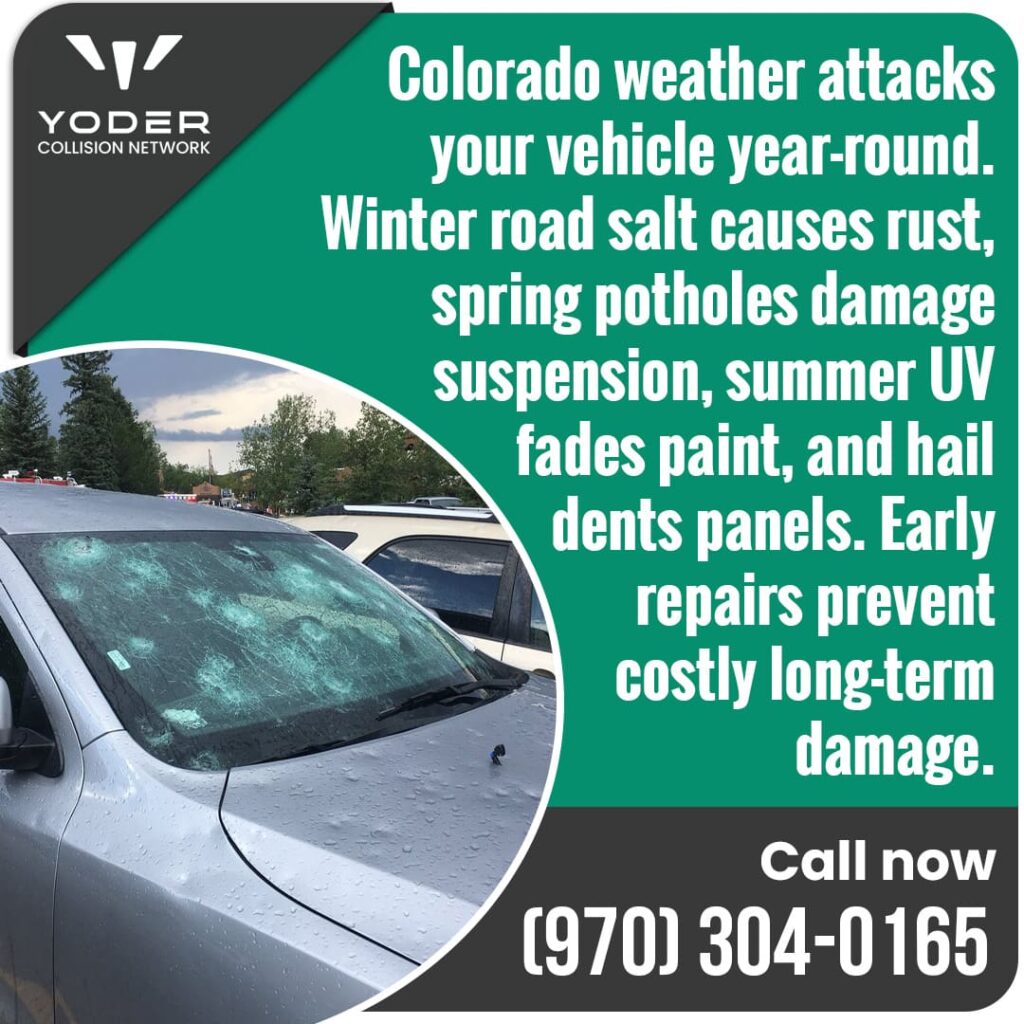
Seasonal Weather Patterns and Their Impact on Exterior Surfaces
Damage to a car from weather often starts as small, unnoticed changes in the paint or metal, which can quickly worsen in Greeley’s extreme seasonal conditions. Local weather changes impact the exterior of your car in different ways throughout the year. Understanding these patterns helps you take protective steps before the damage becomes serious.
Winter: Freezing Temps, Ice, and Road Salt
Winter creates more hidden damage than most drivers realize. Road salt, for example, is important for safety during snowstorms. But it sticks to metal surfaces and accelerates corrosion. It creeps into wheel wells, rocker panels, and seams where moisture collects. Once rust starts, it spreads quickly. Sharp ice crystals also scratch the clear coat and paint. These scratches expose the underlying surface to moisture and air, increasing the risk of rust. Cold temperatures make exterior plastics brittle. Small impacts cause deeper cracks because the material loses flexibility.
Spring: Moisture, Mud, and Expanding Potholes
Spring brings melting snow and high moisture levels. Vehicles collect mud and dirt in hard-to-reach areas. This buildup traps water against the metal and contributes to early rust.
This season also creates more potholes as water expands inside cracks in the road. Sudden pothole impacts bend suspension parts and dent wheels. They also damage bumpers and panels near the bottom of the vehicle.
Summer: Sun Exposure, Heat, and Paint Damage
Summer sunshine is strong in Colorado. Ultraviolet rays weaken the surface of the paint over long periods. This slowly leads to fading and discoloration. Heat softens the protective clear coat, making it more prone to peeling and oxidation. Drivers often notice that red, black, and dark blue cars fade more quickly, and parking all summer outdoors can accelerate this effect. Regular waxing and protective coatings can help shield the paint from UV damage and maintain the vehicle’s shine. Neglecting sun exposure over time can also cause interior surfaces, like dashboards and seats, to fade or crack, reducing overall vehicle value.
Fall: Winds, Debris, and Temperature Swings
Strong autumn winds push sand, dirt, and debris against your car. This causes minor chips and scratches that weaken the protective film on the exterior. Temperature swings also stress the paint. Thermal expansion wears down protective layers. This leads to cracking, dull spots, and increased vulnerability to winter weather. Loose stones on the road surface are common during fall maintenance. These stones strike the front bumper and hood, creating small marks that may require Rock Chip Repair to prevent peeling and rust.
Protecting Your Vehicle from Weather Damage in Greeley, CO
Weather affects every part of the exterior. Small issues often develop quietly until they become expensive repairs. Understanding these risks helps drivers protect their vehicles through routine care and seasonal maintenance.
Paint Damage That Leads to Corrosion
The clear coat protects the paint from UV rays, moisture, and dirt. When it begins to thin or crack, the paint absorbs the impact of the weather directly. Over time, the metal underneath becomes exposed, creating the perfect environment for rust. Left untreated, this becomes structural corrosion. This type of damage is slow but serious. Early repairs protect your investment and reduce the need for major restoration later.
Dents and Dings from Storms and Flying Debris
Windstorms bring tree branches, small rocks, and debris that strike vehicles at high speed. Even minor dents can stretch the metal. Over time, stretched panels lose strength and shape. If these dents break the paint surface, the exposed metal can rust quickly.
This is why many drivers use paintless dent repair when the paint finish is intact, since it can safely return small dents to shape without repainting.
Moisture Damage and Long-Term Rust
Moisture is one of the fastest ways to weaken a vehicle’s exterior. It spreads rust beneath the surface before becoming visible. Rust reduces structural strength and spreads through seams, supports, and edges. Once it becomes advanced, it requires extensive work to stop.
Addressing paint damage and minor dents early helps prevent costly repairs and keeps your vehicle protected against the long-term effects of weather.
How Road Conditions Cause Physical Damage to Vehicles
Drivers often overlook road-related damage because it happens slowly over time. But poor roads impact every part of the car, especially exterior surfaces and panels. Local drivers often turn to a Greeley collision center after severe storms or road-related damage to restore their vehicle’s structure, paint, and overall safety.
Potholes: Wheel and Suspension Damage
Potholes create sharp impacts that dent wheels, scrape bumpers, and throw alignment out of place. Repeated hits weaken suspension parts, causing long-term problems with handling and tire wear. Many drivers need repairs after driving on winter-damaged streets because potholes form quickly during freeze-thaw cycles. This is a common source of vehicle damage from road conditions in Greeley, especially after heavy storms.
Loose Gravel: Paint Chips and Scratches
Gravel roads and construction zones are frequent in Northern Colorado. Loose stones strike the hood, doors, and fenders. These chips may look small, but they can expose bare metal. Moisture enters these chips, increasing the risk of corrosion. Surface chips also weaken the paint around the mark, causing peeling over time. Drivers often need Auto hail repair and chip repair during construction season to keep surfaces sealed and protected.
Salt and Road Chemicals: Rust and Corrosion
De-icing chemicals keep roads safe, but they accelerate rust on unprotected parts of the car. Salt often accumulates on the undercarriage and in seams and openings. In wet, salty conditions, corrosion can begin relatively quickly, so regular thorough washing and undercarriage rinsing are recommended to reduce rust risk.
Regular inspections and timely repairs help prevent road-related damage from worsening, keeping your vehicle safe, structurally sound, and looking its best.
Understanding Weather-Related Auto Damage in Northern Colorado
Northern Colorado has a unique combination of high altitude, strong UV exposure, and sudden storms. These factors increase the risk of dents, fading, rust, and panel fatigue. Many drivers search for Weather-Related Auto Body Damage in Greeley information and prevention tips throughout the year. The region also experiences frequent hailstorms, which can cause dents, broken trim, cracked paint, and even shattered glass. Severe storms have the potential to damage hundreds of vehicles across the city in minutes, making it important for drivers to rely on professional auto body repair in Greeley, CO, to address weather-related damage early and keep their vehicles structurally sound throughout the year.
Hail Damage: The Most Common Weather Hazard in Greeley
Hailstorms in Greeley cause extensive damage each year. Large storms can leave dents on the roof, hood, and trunk, while breaking mirrors, moldings, or even window glass. Even smaller hail can weaken the vehicle’s metal structure. When hail accumulates heavily on roadways, it can reduce tire traction similar to ice or slush, increasing the risk of skidding and loss of control. Heavy hail can also reduce visibility, limit braking control, and make steering more difficult during sudden storms. Prompt hail damage repair is essential, as temporary fixes may conceal deeper structural issues.
Preventing Damage from Weather and Road Conditions
Weather and road conditions can gradually wear down your vehicle’s exterior, leading to costly repairs if left unchecked. Taking simple, proactive steps helps protect your car from dents, rust, fading, and structural damage throughout the year.
Prevent Rust with Regular Washing
Removing salt, dirt, and debris prevents rust and protects the paint. Focus on hard-to-reach areas like wheel wells, undercarriage sections, and lower panels. Regular washing keeps your vehicle looking clean and slows long-term corrosion.
Protect Paint with Wax
Wax provides an extra barrier against sunlight, moisture, and road materials. It strengthens the clear coat and prevents fading or oxidation over time. Seasonal waxing maintains the vehicle’s shine while protecting its exterior.
Avoid Puddles and Potholes
Slow down during storms and avoid deep road depressions whenever possible. Potholes and standing water can dent panels, damage suspension, or throw alignment off. Careful driving reduces both visible and hidden vehicle damage.
Use Covered Parking
Parking in a garage or under a carport shields your vehicle from harsh sunlight, hail, and wind-driven debris. This protection helps prevent fading, dents, and long-term wear on the exterior. Covered parking is a simple yet highly effective way to preserve your car’s appearance and durability.
Fix Chips and Scratches Early
Minor surface damage grows quickly when exposed to outdoor conditions. Early repairs stop rust from forming and spreading across panels. Addressing chips promptly saves money and preserves structural integrity over time.
By following these preventive measures, drivers can maintain their vehicle’s appearance, extend its lifespan, and avoid costly repairs caused by weather and road hazards. Drivers looking for affordable auto body repair services near Greeley can often prevent small seasonal issues from turning into major repairs by getting timely inspections and early intervention.
The Importance of Preventive Maintenance
Preventive maintenance helps reduce damage from weather and road conditions. Key steps include:
- Regular washing and waxing: Washing your vehicle removes salt, dirt, and debris that accumulate on the exterior. Regular waxing adds a protective layer over the paint. Together, these steps prevent corrosion and slow paint fading from UV exposure.
- Address small scratches and dents early: Even minor scratches or dings can allow moisture to reach the metal underneath. Early repair prevents rust from forming and spreading over time. Catching damage early reduces costly bodywork in the future.
- Seasonal inspections: Professional inspections uncover hidden damage caused by hail, potholes, or winter road conditions. Certified technicians can identify weakened panels, alignment issues, or early rust. Routine seasonal checkups help catch problems before they worsen.
- Protective coatings: Applying paint sealants or treatments preserves the clear coat and strengthens the paint. These coatings act as a barrier against UV rays, moisture, and road debris. They extend the longevity and appearance of your vehicle’s exterior.
- Garage or covered parking: Parking in a garage or under a carport shields your vehicle from harsh sunlight, hail, and wind-driven debris. This reduces fading, dents, and other weather-related damage. Covered parking is a simple but effective long-term protection strategy.
By following these steps and consulting a local auto body shop, drivers in Greeley can extend the life, appearance, and safety of their vehicles.
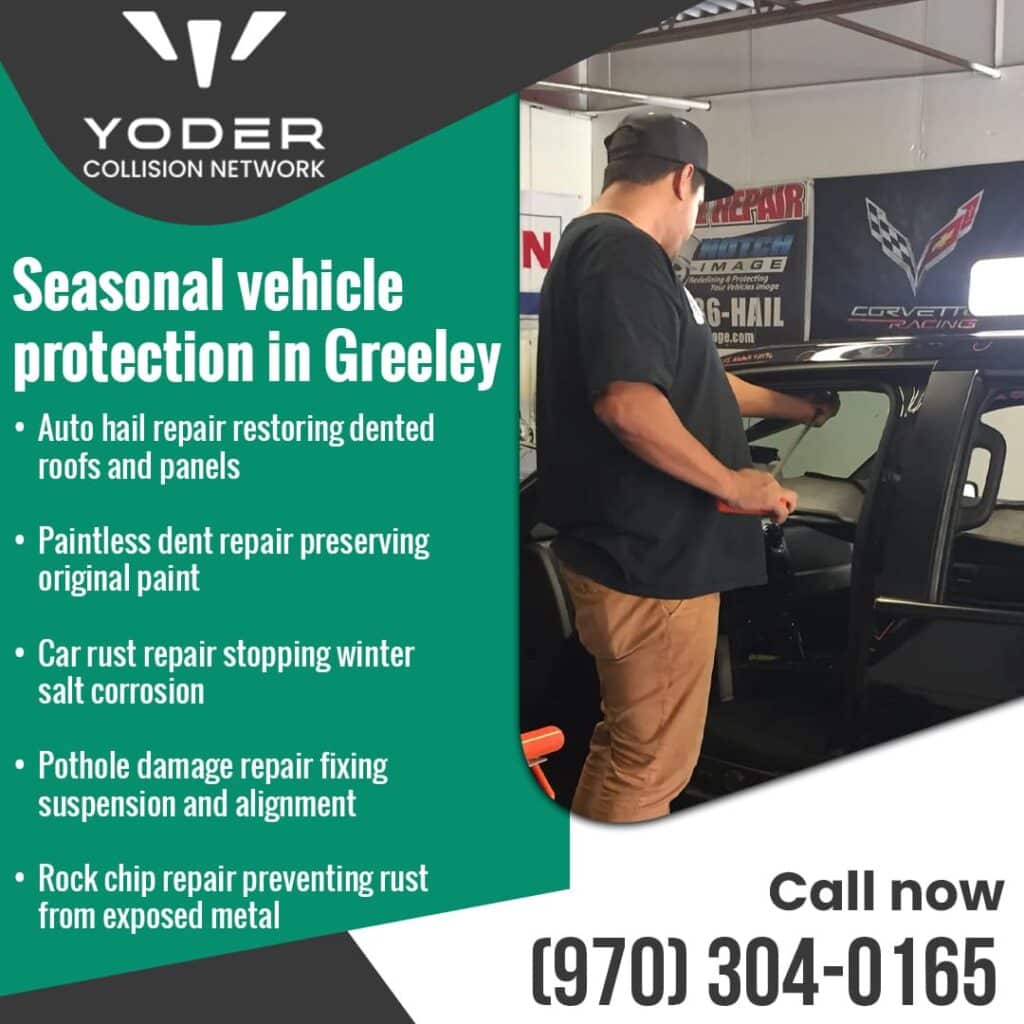
Schedule Regular Auto Body Inspections in Greeley
Even with careful maintenance, some damage can remain hidden beneath the surface. Working with a trusted auto body shop helps weather-related issues get diagnosed accurately and repaired before they turn into costly long-term damage. Scheduling regular inspections with auto body shops like Abra Auto Body Repair of Greeley helps identify early signs of rust, structural stress, or alignment issues caused by weather and road conditions. Certified technicians can spot dents, paint damage, and corrosion before they worsen, making sure that repairs are done correctly and preventing costly long-term problems. Routine checkups keep your vehicle safe, maintain performance, and protect its resale value over time.
Stay Ahead of Weather and Road Damage with Abra Auto Body Repair of Greeley
Greeley’s weather and road conditions create real challenges for vehicle owners. Hail, UV exposure, gravel, potholes, and seasonal temperature swings all contribute to long-term damage. Small chips can turn into rust spots, dents weaken the structure, and road salt wears down protective coatings. Early care and timely repairs prevent most problems from becoming expensive. As part of the Yoder Collision Network, Abra Auto Body Repair of Greeley offers advanced repair solutions using OEM-approved equipment and certified technicians. Whether you need hail damage repair in Greeley, CO, dent removal, rust protection, or full exterior restoration, our team restores vehicles with precision and confidence. Contact us today at (970) 304-0165 or email greeley@abraauto.com to schedule your inspection and keep your vehicle protected year-round.