Choosing the right repair facility can protect your vehicle’s safety, structure, and value. At Carriage Shoppe, we provide expert guidance for anyone searching for a reliable auto body shop in Fort Collins, CO. Accidents, dents, or paint damage may seem minor, but hidden structural issues or misaligned panels can affect performance and safety over time.
When you bring your vehicle to the right shop, technicians with relevant certifications and training handle core tasks such as structural assessment, refinishing, and ADAS calibration, where required. Specific repairs and calibrations follow manufacturer procedures and may require vehicle-specific tools or additional specialized steps. You gain access to trained professionals, modern equipment, and manufacturer-approved procedures that restore your vehicle to factory standards.
This guide highlights the questions you should ask before choosing a shop. By following these points, you can confidently select a repair facility that delivers quality, reliability, and long-lasting results.
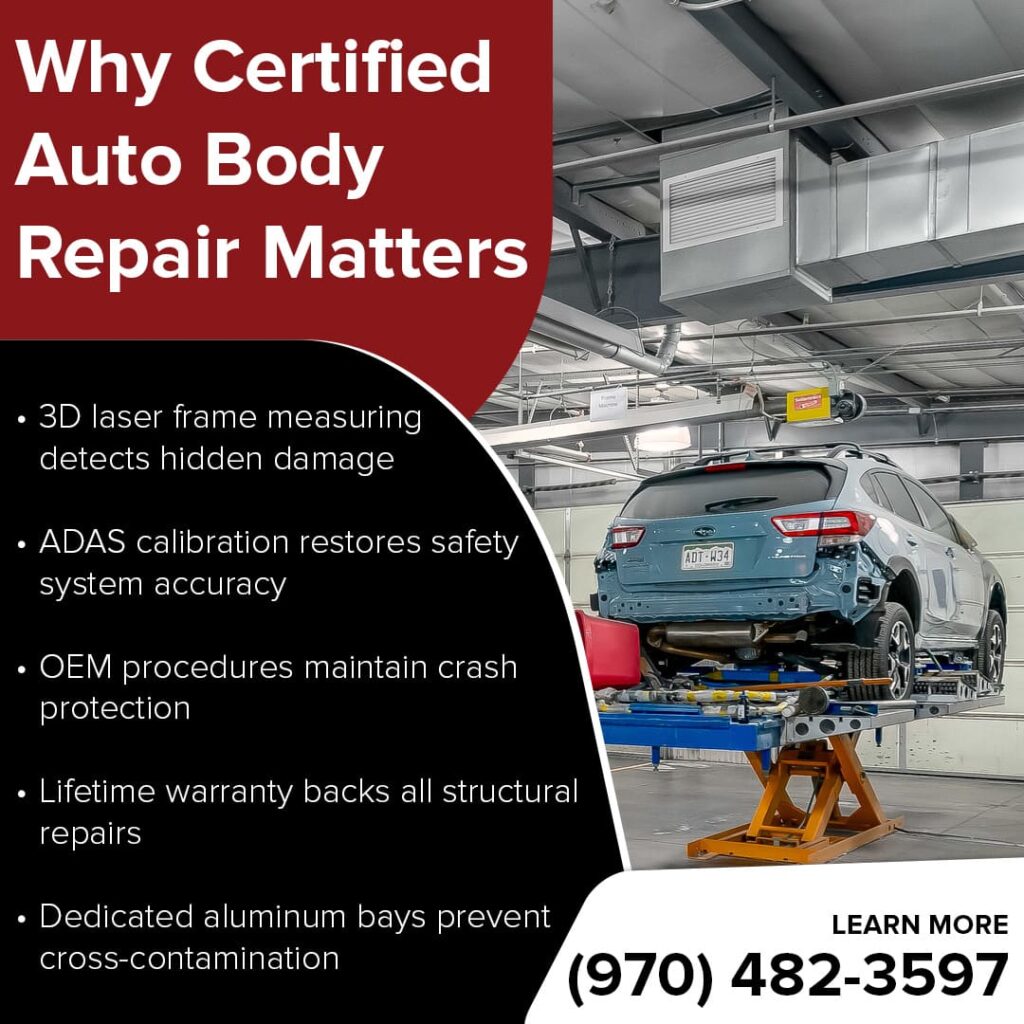
Why Your Choice of Auto Body Shop Matters
Choosing a repair shop is more than fixing visible dents or scratches. The right facility impacts your vehicle’s safety, performance, and long-term value in ways you might not see immediately.
Vehicle safety
Choosing the right shop protects your vehicle’s built-in safety systems. When your car is involved in a collision, airbag deployment, crash sensors, and crumple zones play a vital role in protecting everyone inside. A certified auto body shop follows the manufacturer’s repair specifications to address these systems. This means that every bolt, sensor, and structural element is restored with careful attention, keeping your vehicle prepared for any future impact.
Structural integrity
A qualified shop restores the strength of your vehicle’s structure. Modern cars often use unibody construction, which combines the frame and body into a single structure. Any misalignment during repairs can weaken welds, distort panels, and compromise the way your car absorbs energy during a collision. By correcting the frame and structural elements precisely, a skilled shop maintains the original strength and balance of the vehicle.
Long-term performance
Accurate repairs help the vehicle operate as designed. Frame alignment, suspension geometry, and panel fitment affect handling, tire wear, and overall driving comfort. If these are handled poorly, you may notice uneven tire wear, steering drift, or a rougher ride. Proper repairs keep the vehicle driving smoothly and reliably for years to come.
Warranty protection
The right shop protects factory warranty coverage. Many automakers require repairs to follow OEM-approved procedures for warranty compliance. Shops that deviate from these standards risk affecting coverage for critical structural components or safety systems. Choosing a certified facility helps you maintain manufacturer protections for your vehicle.
Key Questions to Ask Any Auto Body Shop
Choosing the right shop affects how your vehicle looks, drives, and performs after a collision. Asking the right questions helps you separate a shop that only fixes surface damage from one that restores safety, structure, and appearance.
1. Are You a Certified Auto Body Shop?
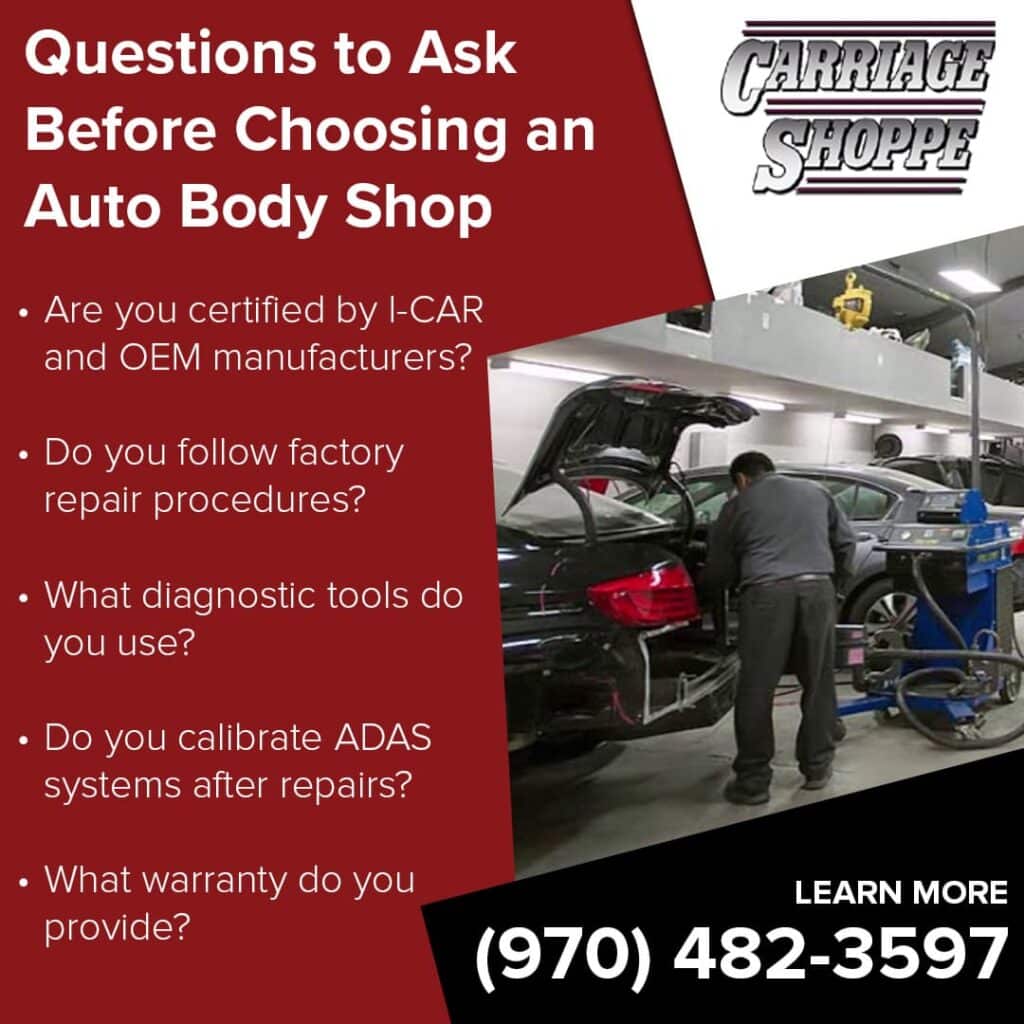
A certified shop follows training standards set by vehicle manufacturers and industry programs. You want a shop with recognized certifications because they indicate technicians have formal training on vehicle construction, materials, and repair protocols. Shops with I-CAR Gold Class recognition and technicians holding I-CAR Platinum or equivalent certifications, plus OEM brand certifications, are trained to work safely on high-strength steels, aluminum panels, and many modern ADAS systems. This kind of certification shows that the team is prepared to work on your vehicle with precise, manufacturer-approved methods.
2. Do You Follow OEM Repair Procedures?
A reliable shop uses manufacturer repair steps for every vehicle. Manufacturer guidelines provide detailed instructions for welding, frame alignment, and sensor calibration. Skipping these steps can leave hidden weaknesses, misaligned panels, or malfunctioning safety features. Following OEM procedures helps maintain the strength, performance, and crash protection designed for your vehicle.
3. What Diagnostic Tools and Repair Technology Do You Use?
Accurate repairs rely on advanced diagnostic and repair tools. A shop that invests in proper equipment can address both visible and hidden damage. Key tools include:
- Frame measuring systems: Provide high precision measurements used to confirm structural alignment and guide repairs to meet manufacturer-specified tolerances.
- ADAS scans: Identify issues in driver-assistance features like cameras and radar.
- Paint systems: Match factory colors while preventing corrosion.
- Aluminum repair tools: Handle specialized materials without weakening panels.
The right technology supports precise structural repairs and flawless cosmetic results.
4. Are Your Technicians I-CAR Trained?
I-CAR training confirms that technicians follow modern repair methods. Technicians who take ongoing courses in steel, aluminum, composites, and electronics can handle advanced repairs on today’s vehicles. This training keeps their skills current and maintains repair quality across a variety of vehicle models.
5. What Is Included in the Repair Estimate?
A clear estimate explains structural, mechanical, and cosmetic repairs. A thorough estimate lists labor, parts, paint, and inspections. It should also highlight any hidden damage, like bent inner panels or affected sensors, so you know what will be addressed.
6. Do You Work With Insurance Providers?
Shops that coordinate with insurers simplify the repair process. Direct communication with insurance companies helps manage documentation, claim approvals, and supplemental estimates. This reduces delays and makes it easier for you to get your vehicle back on the road.
7. What Type of Warranty Do You Provide?
A written warranty explains repair coverage and duration. A strong warranty covers structural repairs, paint, and refinishing. It shows confidence in the quality of work and gives you a clear understanding of the shop’s commitment to long-lasting results.
8. How Do You Handle Safety System Recalibration?
Many repairs require ADAS recalibration. If cameras, radars, windshields, or components affecting sensors are repaired or replaced, recalibration may be required to restore correct system operation. Recalibration procedures follow manufacturer data and often require specialized tools and documented test steps.
9. How Do You Match Paint to Factory Color?
Shops use digital tools to match the original paint shade. Computerized color-matching, controlled spray booths, and multi-stage coatings produce a seamless finish. Accurate refinishing protects against corrosion, UV fading, and environmental damage while maintaining your vehicle’s original appearance.
10. Do You Offer OEM Parts When Available?
OEM parts match the vehicle’s original fit and material specifications. Using OEM components maintains panel alignment, sensor operation, and structural integrity. It also supports resale value and makes sure that repairs comply with manufacturer standards.
Carriage Shoppe applies all of these practices as a certified auto body shop in Fort Collins, CO, combining trained technicians, advanced equipment, and manufacturer-approved procedures to deliver reliable, safe, and precise repairs every time.
Signs You’ve Found a Reliable Auto Body Shop
A dependable shop shows clear signs of professional workflow. Look for the following features:
- Clean and organized facility
A tidy, well-maintained workspace reflects attention to detail. It shows that the shop cares about the quality of repairs and handles every vehicle with respect. - Staff who communicate repair steps clearly
Technicians and customer service staff should explain the repair process in simple terms. You should be aware of what work will be done and how it affects your vehicle’s performance and safety. - Written documentation for each stage of repair
Detailed records for inspections, damage assessment, and completed repairs provide transparency. This documentation helps track progress and can be useful for insurance or resale purposes. - Displayed certifications
Visible OEM or industry certifications indicate that the shop meets manufacturer and professional standards. It reflects ongoing training and compliance with approved repair practices. - Modern diagnostic and repair equipment
Advanced tools like frame measuring systems, ADAS scanners, and paint-matching technology allow for precise repairs. They help the shop restore your vehicle’s structure, safety features, and finish accurately.
Why Carriage Shoppe Is a Trusted Auto Body Shop in Fort Collins
Finding a repair shop that combines skill, training, and the right equipment makes a big difference in the results you get. Carriage Shoppe has built a reputation for reliability and precision across every type of repair.
Certifications and Training
We maintain I-CAR Gold Class recognition for our facility, and individual technicians hold role-specific I-CAR certifications and OEM brand recognitions as appropriate. Our training covers repairs on modern structures, including steel, aluminum, and composites, and we provide ADAS diagnostic and calibration services following manufacturer procedures.
Technology and Equipment
The shop uses advanced frame measuring, laser scanners, and controlled paint booths. We invest in specialized tools that keep your vehicle aligned and structurally sound. Aluminum repair stations prevent material contamination, and manufacturer-approved devices help maintain the quality of repairs. These technologies give your vehicle a finish that matches factory standards.
OEM Repair Standards
We follow manufacturer repair guidelines for every vehicle. Technicians reference OEM data for welding, panel alignment, and structural work. This approach keeps your car performing safely and maintains the integrity of impact zones, bumpers, and other critical components.
ADAS Calibration and Diagnostics
The team recalibrates cameras, radar, and sensors for driver-assistance systems. Each ADAS component is tested after repair to confirm that features like lane assist, emergency braking, and collision warnings operate correctly. This careful calibration keeps your safety features functioning as designed by the manufacturer.
Lifetime Warranty
We provide a lifetime warranty on workmanship. The warranty covers structural repairs, paint, and refinishing, reflecting confidence in the quality and durability of our work.
Support With Insurance Claims
The staff works with major insurers to handle estimates and approvals. Our team manages documentation and repair authorizations, reducing delays and helping you get back on the road faster.
Trust Carriage Shoppe for Expert Auto Body Repairs in Fort Collins
If your car needs repair, don’t settle for anything less than precise, certified service. Contact Carriage Shoppe, a reliable auto body shop in Fort Collins, to restore your vehicle safely and accurately.
Call us today at (970) 482-3597 or email officestaff@carriageshoppe.com to schedule an appointment or request a repair estimate. Our team is ready to guide you through the process and get your car back to top condition.