
Winter driving can put added stress on vehicles, especially those that have recently undergone collision repair in Fort Collins, CO. After a repair, metal, paint, and safety systems can respond differently to cold temperatures, ice, snow, and road salt. At Carriage Shoppe, our team of auto collision repair experts in Fort Collins, CO, focuses on restoring your vehicle’s structure and performance so it can handle seasonal conditions effectively.
Preparing your car for winter after repairs goes beyond routine maintenance. You need to pay attention to frame alignment, paint and panel protection, sensor function, and tires to maintain reliable handling and safety. By taking steps to protect repaired areas from corrosion, stress, and environmental impacts, you can reduce the chance of damage and maintain your vehicle’s performance throughout the season. This guide walks you through the key steps to get your vehicle ready for winter after repair.
Why Winter Readiness Matters After Collision Repair
Winter can put your vehicle through stress that repaired components are not used to. Even a minor drop in temperature or a layer of ice can reveal weak points in panels, paint, and structural areas that were restored after a collision. Taking action now helps your car maintain performance and reliability during the cold months ahead.
Cold Weather Effects on Repaired Vehicles
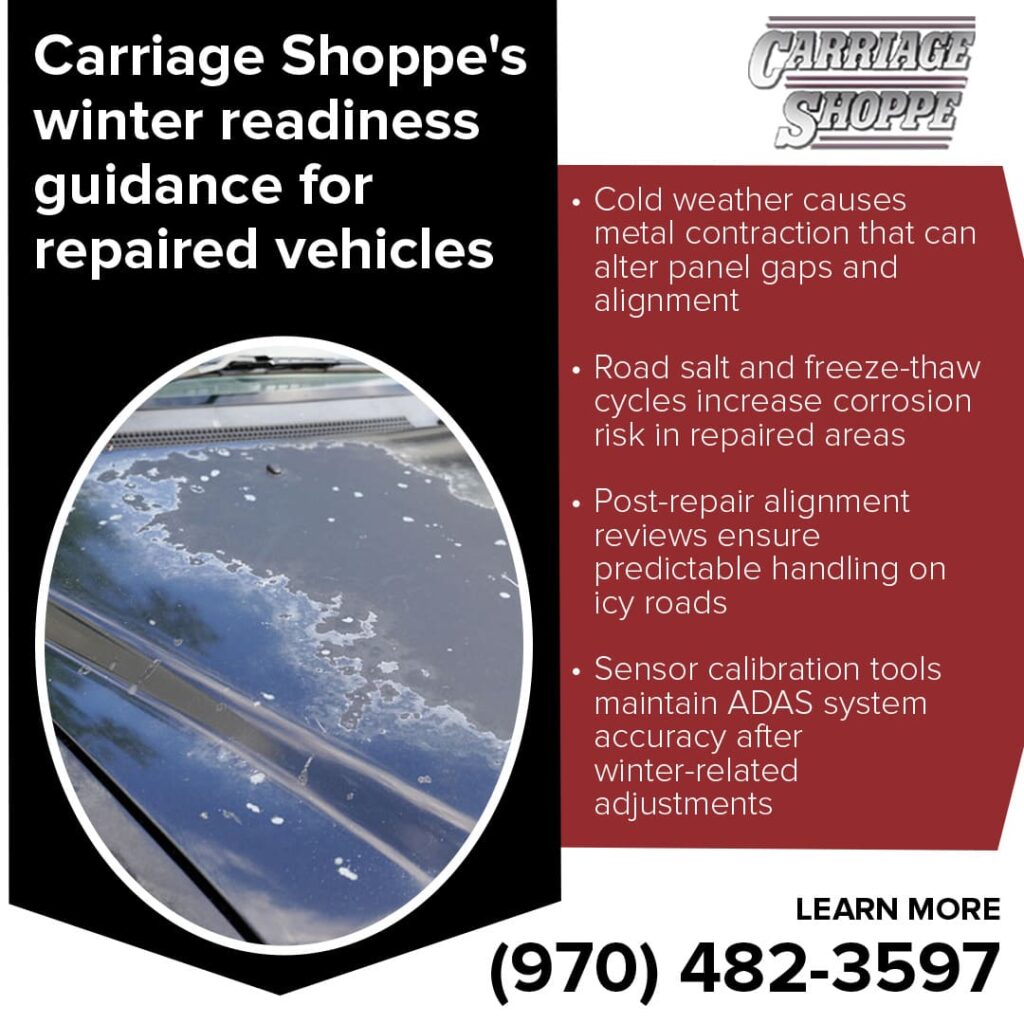
Cold temperatures change how repaired vehicle components behave. Metal contracts in low temperatures, which can alter panel alignment and gaps. Paint cures more slowly, and adhesives or bonded joints can stiffen, reducing their flexibility. These changes may affect overall durability and performance.
Key cold-weather impacts include:
- Panel fit shifts caused by metal contraction
- Slower curing of paint layers
- Reduced elasticity of seals and adhesives
Winter Driving Conditions in Fort Collins, CO
Fort Collins winters expose vehicles to repeated environmental stress. Snow, ice, and freeze-thaw cycles can strain repaired panels and joints. Road salt accelerates corrosion, and limited visibility increases the risk of collisions for any driver relying on a collision repair center in Fort Collins.
Common winter conditions include:
- Packed snow and ice on roads
- Salt accumulation in seams and wheel wells
- Reduced traction and longer stopping distances
At Carriage Shoppe, we pay close attention to how repaired vehicles respond to winter conditions. Our repair services address not only the visible damage but also the structural, paint, and seal areas that can be vulnerable to cold weather and road salt. Our team of auto collision repair experts in Fort Collins, CO, designs repairs to handle seasonal challenges, helping your car remain reliable and safe even in the harshest months.
Collision Repair and Winter Safety Basics
After a collision, your vehicle may look as good as new on the outside, but the work behind the panels is what truly matters. Addressing structural, mechanical, and electronic components gives your car the ability to perform safely in winter conditions.
What Collision Repair Restores
Collision repair restores vehicle structure, safety systems, and protective surfaces. Repairs correct misalignments, return electronics to proper operation, and replace damaged body panels, allowing vehicles to meet manufacturer safety and performance specifications. Trusting auto collision repair experts in Fort Collins, CO, ensures these standards are met.
Restored areas include:
- Structural alignment
- Airbag and sensor functionality
- Exterior and interior panel protection
Why Post-Repair Winter Preparation Is Needed
Repair does not prevent environmental wear. Exposure to cold temperatures, snow, and road chemicals can stress repaired areas. Winter preparation reduces long-term damage and maintains repair quality.
Preparation helps reduce:
- Premature corrosion and rust
- Sensor malfunctions
- Handling changes due to frozen or stiff components
Structural and Frame Checks Before Winter
Preparing your vehicle for winter starts with a careful look at its structure and frame. Cold roads, ice, and snow put extra stress on every component, and repaired areas can behave differently under these conditions.
Unibody and Frame Alignment Review
Correct alignment supports vehicle stability during winter driving. Modern vehicles use unibody construction, where the frame and body form a single integrated structure. Misalignment can affect handling, tire wear, and traction on icy roads.
Why alignment affects winter handling:
- Uneven steering response
- Accelerated tire wear
- Reduced stability on ice
Suspension and Mounting Point Inspection
Suspension components transfer road forces and maintain control. Repair can affect control arm geometry, subframes, or fastener torque, which should be checked before winter driving.
Inspected components include:
- Control arms and subframes
- Fasteners and mounting points
Paint, Panels, and Corrosion Protection
Winter conditions can challenge the surfaces of your vehicle, especially after a collision repair. Cold temperatures, snow, and road salt can interact with paint and exposed metal in ways that affect both appearance and durability. Taking steps to protect panels and coatings helps your vehicle maintain its finish and structural integrity throughout the season.
Paint Protection After Repair
Paint layers protect metal surfaces from moisture, salt, and temperature changes. A properly applied clear coat preserves adhesion and prevents corrosion in winter conditions.
Protection relies on:
- Uniform clear coat coverage
- Properly sealed panels
Preventing Rust During Winter Months
Salt and moisture increase corrosion risk in repaired areas. Water and road chemicals accumulate in low-body panels, seams, and wheel wells.
Areas most exposed to corrosion:
- Wheel wells and lower doors, where water and salt collect
- Bumper seams, which can trap moisture
- Lower body panels and undercarriage sections
Regular inspection and cleaning of these areas helps reduce rust formation. Applying wax or protective coatings to repaired surfaces adds an extra layer of defense, maintaining the longevity of your repair.
Bumpers, Sensors, and Impact Zones
Vehicles that have recently gone through collision repair require special attention to their bumpers and sensors during winter. Cold temperatures, ice, and snow can change how these components respond and affect overall vehicle safety. Paying attention to these areas can help you maintain the protective and functional features of your car.
Bumper Performance in Cold Conditions
Bumpers absorb energy differently in low temperatures. Stiffening of materials can reduce energy absorption efficiency. Mounting brackets should be inspected for stability.
Sensor Placement After Repairs
Collision sensors rely on precise placement to function properly. Snow buildup, ice, or misalignment can reduce effectiveness.
Systems affected by winter conditions:
- Parking and collision sensors
- Adaptive cruise control
Even minor buildup of ice or snow on the sensor can reduce detection accuracy. Regular visual inspections and clearing off buildup from sensors can maintain responsiveness. For systems like adaptive cruise control, incorrect sensor readings can impact stopping distances or lane guidance, making early checks after repair important.
Windshield and Glass Readiness for Winter
Winter conditions put extra pressure on every part of your vehicle, and your windshield plays a larger role than many drivers realize. Proper attention to glass and bonding can help your vehicle handle snow, ice, and cold temperatures safely.
Windshield Bond Strength After Replacement
Windshield adhesives cure more slowly in cold temperatures. Proper bonding supports roof strength, airbag deployment, and overall structural integrity.
Important factors include:
- Adequate curing time before winter exposure
- Temperature during installation
Visibility and Driver Safety
Clear visibility is essential for winter driving. Wiper performance, defrosters, and windshield clarity affect reaction time and driver safety.
Visibility depends on:
- Wiper coverage and condition
- Defroster efficiency
Tires, Alignment, and Wheel Balance
Winter driving puts extra demands on your tires and alignment, especially after your vehicle has undergone collision repair. Checking these components before cold and icy conditions helps your vehicle handle properly and maintain traction on slippery roads.
Why Alignment Should Be Rechecked
Post-repair alignment affects winter traction. Geometry shifts can create uneven tire contact, reducing grip on snow or ice.
Tire Wear After Repair
Uneven tire wear indicates alignment or suspension issues. Signs drivers should watch for:
- Pulling to one side
- Uneven tread depth
- Vibration while driving
By monitoring these signs, you can catch potential alignment or suspension problems early and maintain consistent contact between your tires and the road.
Post-Repair Maintenance Checklist for Winter
After a repair, your vehicle has regained much of its original performance and appearance, but winter conditions introduce new challenges. Regular checks and inspections help you spot potential issues early, keeping your car reliable and safe during icy and snowy months.
Items Drivers Can Monitor
Drivers can identify early signs of winter-related issues.
| Item to Check | Purpose | Frequency |
| Panel Gaps | Detect metal contraction or alignment shifts | Weekly during winter months |
| Dashboard Warning Lights | Identify sensor or electronic issues early | Each drive |
| Unusual Noises | Check suspension, mounting points, or loose components | Weekly |
| Tire Condition | Identify uneven wear, traction issues | Monthly |
| Wiper Function & Defroster | Maintain visibility and safety | Weekly |
| Windshield Bond | Verify adhesive integrity | Before winter driving |
Items a Collision Repair Center Should Verify
Professional inspections confirm repair quality and winter readiness.
| Inspection Area | Details | Technician Action |
| Alignment & Frame | Verify unibody and frame integrity | Use computerized frame measuring tools |
| Suspension & Mounting Points | Control arms, subframes, fasteners | Adjust torque, inspect for stress or bending |
| Paint & Panels | Clear coat and bonded areas | Inspect for cracks, chips, or gaps |
| Sensors & Electronics | Parking, collision, and ADAS systems | Calibrate and test according to manufacturer specs |
| Windshield & Glass | Bonding and clarity | Inspect adhesive and defrost performance |
At Carriage Shoppe, we follow these checks closely after each repair to prepare your vehicle for winter driving. By combining driver awareness with professional inspections, your vehicle maintains performance, safety, and durability throughout the season.
Choosing a Collision Repair Center in Fort Collins for Winter Readiness
Selecting the right repair center affects how your vehicle handles the challenges of winter driving. You want a repair center that goes beyond standard fixes and addresses both structural and seasonal concerns.
Qualifications That Matter
Certified procedures support durability and safety. Technicians trained in manufacturer-approved repair methods handle repairs according to specific vehicle requirements. These professionals follow the exact procedures needed for frame alignment, suspension, and safety system restoration.
Choosing a repair center with certified technicians helps your vehicle maintain its performance and stability under winter conditions. A center that meets OEM standards pays close attention to structural repairs, sensor recalibration, and panel integrity, giving you confidence in the repairs completed.
Facility Capabilities
Specialized equipment supports accurate repairs and winter readiness. Modern vehicles require precise tools for frame measuring, sensor calibration, and alignment checks. Advanced equipment allows technicians to detect subtle misalignments or mounting issues that could affect handling on icy or snowy roads.
Equipment that supports winter safety
- Frame measuring systems
- Sensor calibration tools
Carriage Shoppe combines certified procedures with advanced equipment, making it a trusted choice for a collision repair center in Fort Collins capable of preparing your vehicle for winter conditions.
How Carriage Shoppe Supports Winter-Ready Collision Repair
Preparing your vehicle for winter after a repair requires more than standard maintenance checks. You need a repair provider that follows strict procedures and is familiar with local weather challenges to keep your car reliable throughout the season.
Repair Standards Followed at Carriage Shoppe
We follow the manufacturer’s repair specifications. Every repair is performed using OEM-approved methods that restore your vehicle’s structure, paint, and safety systems. This approach helps your car handle snow, ice, and cold temperatures without losing performance or durability.
Our technicians focus on precise alignment, accurate sensor placement, and durable paint applications. Each step of the repair process addresses the demands of winter driving, giving your vehicle the stability and reliability it needs on icy or salted roads. By adhering to manufacturer standards, the repair process minimizes potential weaknesses in repaired areas and maintains the integrity of critical safety features.
Local Experience in Fort Collins, CO
Local experience supports winter-specific repair decisions. Our technicians have hands-on experience with Fort Collins’ winter conditions, including snow accumulation, freeze-thaw cycles, and the effects of road salt. We know how these factors interact with repaired structures, panels, and sensors. This expertise allows us to select repair methods and materials that resist winter damage, keep systems functioning, and maintain the vehicle’s appearance.
Drivers benefit from repairs that hold up under local seasonal stress, reducing the likelihood of recurring issues. The combination of manufacturer-standard repairs and local knowledge positions us as a leading collision repair center in Fort Collins for vehicles that need to remain dependable through the winter months.
Schedule Your Winter Readiness Inspection Today
Winter places added demands on vehicles that have completed repairs, and professional follow-up can help address issues before they affect safety or drivability. If your vehicle has undergone collision repair in Fort Collins, CO, the team at Carriage Shoppe is ready to review structural alignment, paint protection, and safety systems for seasonal readiness.
To schedule an inspection or speak with a repair specialist, contact us at (970) 482-3597 or email officestaff@carriageshoppe.com. Our facility supports drivers with accurate repairs and winter-focused inspections designed around local driving conditions.